About Triodian
Making Provable AI the standard.
Triodian gives organisations a way to demonstrate that their AI systems operate within the limits they have set, rather than simply declaring it. We think the next wave of adoption in regulated industries will come from stronger evidence rather than lighter rules.
Why we exist
Trust has been the bottleneck. We built the proof.
The organisations with the most to gain from AI are often the slowest to deploy it. Banks, hospitals, funds and critical infrastructure operators rarely doubt the value. What stops them is that they cannot yet show a regulator, a board or a customer that the system is doing only what it was approved to do.
That gap has held good AI back. Serious deployments tend to reach the same question at procurement: can you prove it? For a long time the honest answer was no, because the tools to prove it did not exist. Triodian was built to change that answer to yes, which lets responsible organisations move faster rather than slower.
The shift we enable
From taking it on trust to verifying it for yourself
Today’s governance frameworks, the EU AI Act, NIST and the standards emerging alongside them, represent real progress. They achieved what was possible while one constraint stayed in place: a system’s compliance could only be asserted by the party running it. Triodian removes that constraint.
Governance by declaration
An operator documents its controls and attests, in good faith, that the system stays within them. The proof is a statement of intent, such as a model card, produced by the party with the most riding on it being believed. This reflected what could be shown at the time, not a lack of will.
Governance by verification
The constraint is enforced in hardware, and compliance can be checked by an outside party such as a board, an auditor or a regulator, without anyone relying on the operator’s word. The proof becomes a property of the running system that people who do not benefit from the answer can confirm.
This is not a young industry finally submitting to rules. Self-assurance was never a loophole the sector chose; it was the limit of what the technology could demonstrate. What has changed is the ground that governance can stand on. Oversight can now rest on evidence rather than trust, which is a gain in capability rather than a tightening of permission.
Grounded, not speculative
The reasoning engine already runs in production
The governed-reasoning engine behind the appliance is not a prototype. It already runs a live commercial product in an unrelated domain, at scale, today.
pinpole
A live platform that simulates cloud architecture across AWS, GCP and Azure before any resource is provisioned, with thousands of simulations run. It is driven by the same governed-reasoning lifecycle that reasons over a decision stream, the same lifecycle the appliance applies to AI decisions.
pinpole.cloud →pinpole evidences the engine, not the deeper signal. The near-term work rests on the proven part; the semantic-divergence layer remains a design claim pending validation.
Our posture
We are here to widen the road, not to put up gates
Verifiable governance is sometimes read as a brake on innovation. In practice it works the other way. What slows innovation today is doubt that cannot be answered: the deployments that stall, the pilots that never reach production, the capabilities held back because no one can stand behind them.
When compliance can be proven, the conversation changes. A board can approve a more ambitious use because it can see the limits hold. A regulator can allow a faster path because the evidence is there to check afterwards. A customer can buy with confidence because provenance travels with the output. Being able to verify is what lets responsible organisations say yes more often.
We also regard existing regulators and standards bodies as allies. They built the framework that taught the market to ask the right questions. Triodian raises the ceiling on what those frameworks can require, moving the answer from “we intend to” to “here is the proof.” The standard stays; the assurance behind it becomes real.
Leadership & stewardship
The builder and the guardian, held in different hands
A governance technology is only as trustworthy as the structure that holds it. So the company that builds it and the body that safeguards it are deliberately separate, one runs the business, the other keeps the IP beyond the reach of any single owner.

Damian Hickey
Founder · Business architect
Founder and business architect, inventor of the Deterministic Governance Architecture application and architect of the Reasoning Fabric that implements it. He runs the company that builds and commercialises the appliance.
Professor Toby Walsh
Independent chair · The Foundation
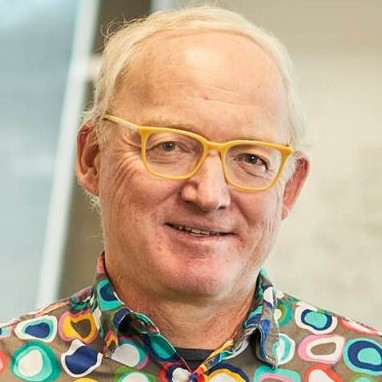
Laureate Fellow and Scientia Professor of Artificial Intelligence at UNSW, Professor Walsh has agreed to serve as independent chair of the Casuarina Foundation, which holds the governance IP. He leads the guardian, not the company; the founder holds no veto. He takes up the role on the Foundation’s establishment.
The Foundation
IP that can’t be bought and buried.
The Foundation will be the Casuarina Foundation, an independent Australian charity being established for this purpose, with ACNC registration underway. It will hold the patents and the governance IP, with control and custody beyond any single owner, including Triodian itself. Professor Toby Walsh (UNSW) has agreed to serve as independent chair, taking up the role on the Foundation’s establishment.
Its purpose is acquisition resistance. A governance technology is most valuable to the companies it would constrain, which gives a frontier lab every incentive to quietly buy the company that builds it and shelve the work. Holding the IP inside an independent charity, beyond any one owner’s reach, is what stops that from happening.
Independent
A charity being established, chaired independently; the founder holds no veto and no casting vote.
Custodian of the IP
Will hold the patents so the company can build on them without being able to sell them out from under the mission.
Acquisition-resistant
Structured so the governance IP cannot be captured and shelved by the entities it exists to govern.
How we’re structured
What stops the protections being removed later?
The honest answer most governance vendors can’t give: their safeguards last only as long as the company chooses to keep them. Ours are held in a structure no single owner controls.
Protections that can be switched off
A single company owns the technology, sets its own limits and answers to its own commercial incentives. The safeguards exist only while that company chooses to keep them, and the party with the most reason to remove them is the one in control.
Protections no single owner can remove
The company builds and commercialises the appliance under licence. The independent Foundation will hold the IP and the governance mandate. Neither can quietly weaken the protections, because the party that would benefit from removing them does not control them.
Triodian (OpCo)
The commercial operator
Builds and sells the appliance. Holds a licence, not the patents.
The Foundation
The independent custodian
Will hold the IP and the governance mandate. Independent of the company.
The principle in one line
AI governance is moving off trust and onto proof, now that proof is possible.
Triodian builds the layer that makes that proof a routine, checkable fact. The right to set a constraint, the system that operates under it, and the evidence that it held are no longer collapsed into a single act of self-assurance. Separating them, and making the last one verifiable, is what turns responsible AI from a promise into something an organisation can stand behind.
The name
Named for a boundary that lets life flourish inside it.
Triodia enforces a boundary no predator can cross, and an ecosystem lives inside it. That is the shape of the thing we build: a hard limit at the edge, and everything free to grow within.
What it changes
Confidence, compounded
Deployment, unblocked
The governance objections that stall AI at procurement get a concrete answer, so capable systems reach the organisations that need them sooner.
Oversight, made real
Boards, auditors and regulators can check constraint compliance after the fact, which turns oversight from a paperwork exercise into something verifiable.
Innovation, with a floor under it
When limits can be shown to hold, organisations can take on more ambitious uses of AI, because the safeguards are demonstrable rather than assumed.
Work with us
Responsible AI, ready to prove itself.
We welcome enterprises, investors, regulators and partners who think the future of AI is one we can verify rather than take on trust.
Get in touch →